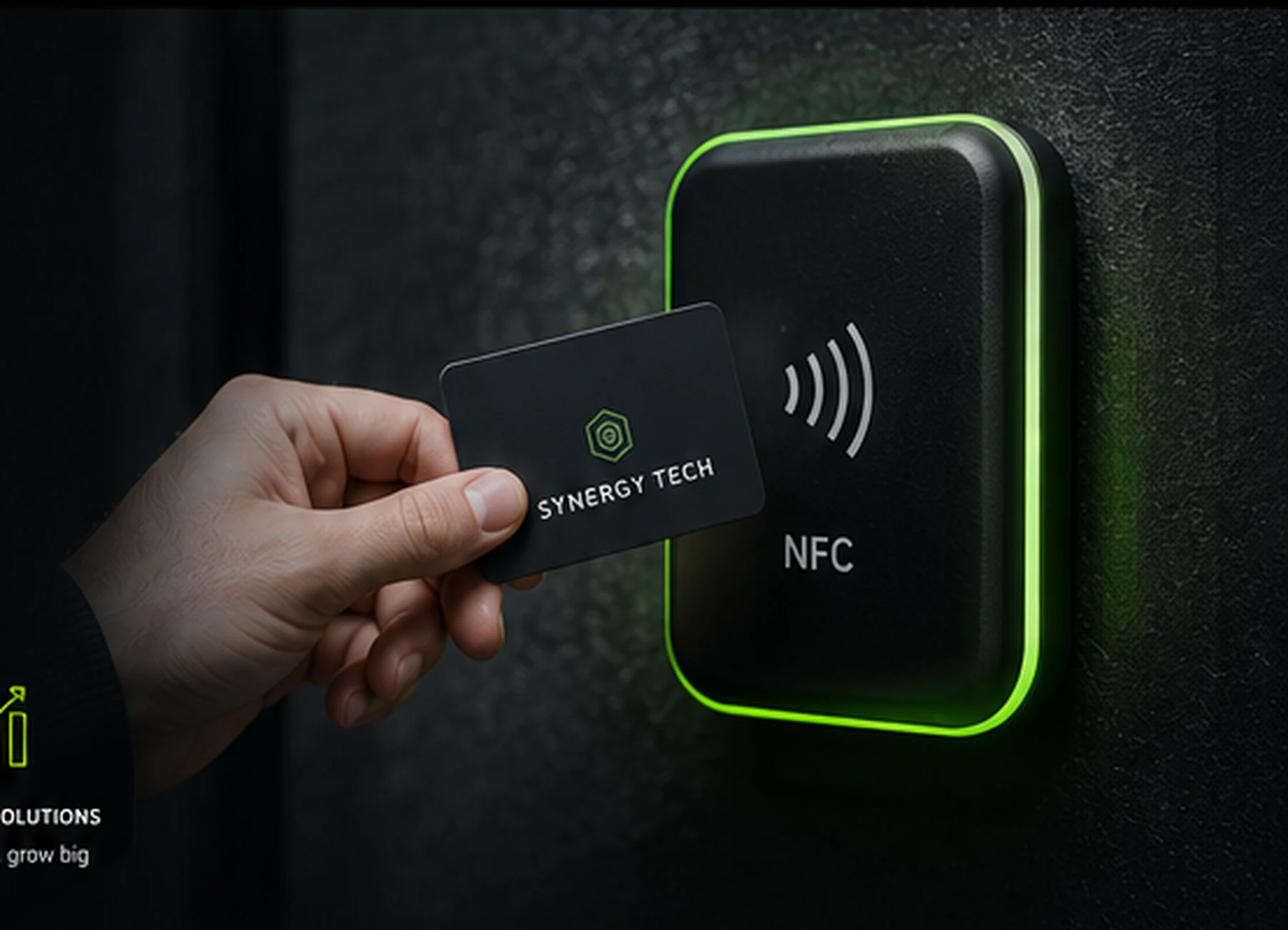
← All services NFC / RFID SOLUTIONS

Identify.
Connect.
Trigger action.

From a single NFC tag to distributed RFID identification. We design the reader, tag, local application, permissions, data flow and integrations around what the identification should actually achieve.

Contactless identification Local web systems Access & registration Integration ready
01 / IDENTITY → CONTEXT → ACTION

The tag is only the identifier.

The useful part is what the system knows and does with it.

An NFC card, RFID tag, key fob, wristband or industrial label can carry or reference an identity. The surrounding software can then validate the identity, understand the location and user context, apply permissions, open the correct record, register an event, trigger a workflow or pass information to another system.

NFC OR RFID?

Different technologies fit different distances and workflows.

NFC is part of the HF RFID family, but the practical user experience is different from long-range RFID systems. We select the technology around reading distance, speed, environment, device support and the level of intentional user interaction required.

HF RFID

Controlled short-range identification

Useful for cards, labels and tags where dedicated readers or a defined reading position are preferred.

  • Badges and credentials
  • Tool or asset identification
  • Check-in / check-out workflows
  • Document or item association
  • Fixed or desktop reading stations
UHF RFID

Longer range and multiple-tag reading

Useful when objects should be detected without a deliberate tap, including scenarios with dedicated antennas and readers.

  • Inventory and asset visibility
  • Warehouse and logistics flows
  • Gate, portal or zone detection
  • Bulk identification of several tags
  • Tracking movement between defined areas

Actual reading distance and reliability depend on tag type, antenna, reader power, mounting, material, orientation, surrounding objects and local radio conditions.

WHAT CAN IT SOLVE?

Contactless identification can remove friction from physical workflows.

These are generic examples. A project can use one function or combine several where it creates a clear operational benefit.

01Personnel identificationRecognise the right employee, operator or visitor.
02Time & attendanceRegister arrival, departure or another defined event.
03Access control inputProvide an identity to an access or permission workflow.
04Tool / asset IDIdentify equipment, tools or reusable assets.
05Maintenance pointOpen the correct machine, service record or instruction.
06Check-out / returnAssociate an item with a user or location.
07Inventory / logisticsRegister or detect movement through a defined flow.
08Production contextIdentify operator, workstation, item or process step.
09Inspection workflowOpen the right checklist and store the event.
10Visitor / temporary IDIssue temporary credentials with controlled validity.
11Information accessOpen documentation, instructions or live status.
12TraceabilityCreate a timestamped history around physical interactions.
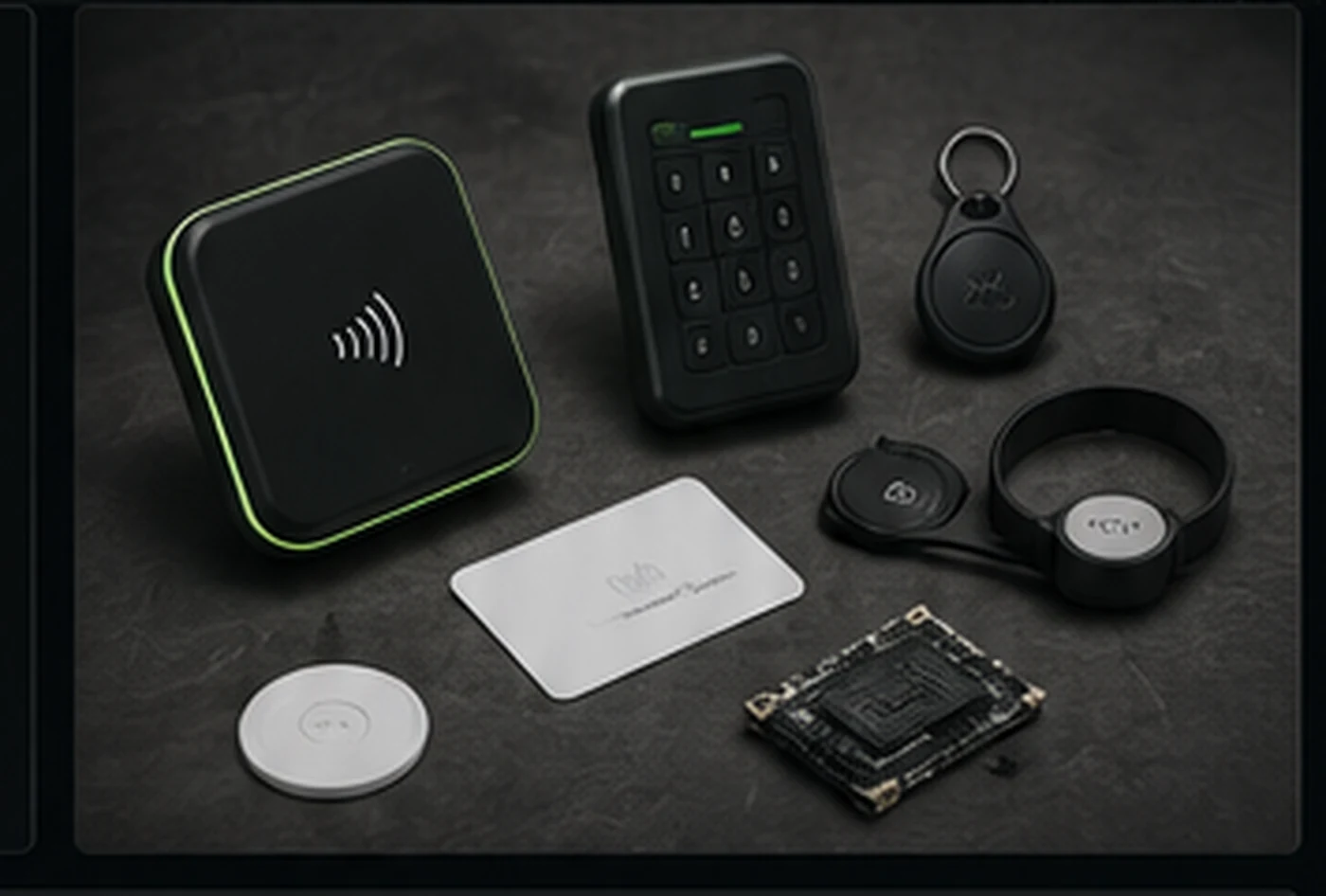
Illustrative NFC and RFID hardware including reader, tags, card and key fob Illustrative hardware examples
TAGS, READERS & DEVICES

The physical form matters as much as the software.

The same system idea can use very different hardware. We choose form factor and reading method around mounting, wear, range, environment, user behaviour and how the identifier needs to move through the operation.

CARDS

Personnel, access, temporary credentials and controlled identification.

KEY FOBS

Compact personal identification where a card is inconvenient.

LABELS / STICKERS

Low-profile identification for suitable surfaces and assets.

RUGGED TAGS

Durable tags for tools, machinery and industrial environments.

WRISTBANDS

Wearable credentials for selected operational scenarios.

FIXED READERS

Wall, gate, station or machine-mounted reading points.

USB / DESKTOP READERS

Simple enrolment, administration and workstation interaction.

MOBILE READERS

Handheld or rugged devices where the reader moves with the user.

GENERIC IDENTIFICATION FLOW

A contactless read can become a controlled business action.

The logic is configurable. The same pattern can support access, registration, maintenance, logistics, inspection or another operational workflow.

01PRESENT

Card, tag, phone or RFID-labelled object enters the reading zone.

→
02READ

The reader captures the identifier or permitted tag data.

→
03VALIDATE

The application checks identity, permissions and context.

→
04ACT

The system registers, opens, updates or triggers the intended action.

→
05FEEDBACK

The user or connected system receives a clear result.

→
06LOG

Important events can be stored for history and traceability.

LOCAL SYSTEMS

Keep the core identification flow close to the operation.

Where it makes sense, the system can run on the customer's local network. Readers and web clients communicate with a local application and database, while external services are added only when required.

01

Local application
Business rules, identity mapping, permissions and workflow logic.

02

Local database
Users, tags, assets, configuration, status and history.

03

Browser-based administration
Manage identities, tags, permissions and operational views.

04

Optional integration
Connect external systems only through supported and approved interfaces.

NFC / RFIDGENERIC ARCHITECTURE
TAGcard / label / asset
READERNFC / HF / UHF
MOBILEsupported device
↓
LOCAL APPLICATION / APIidentity · permissions · logic · workflow
↓
DATABASEusers · tags · assets · history
WEB INTERFACEadmin · operator · overview
↓ OPTIONAL
EXISTING SYSTEMSHR · ERP · WMS · maintenance · APIs
BUILT FOR THE ENVIRONMENT

A tag that works on a desk may fail on a machine.

Industrial identification needs the physical environment considered early. Metal, liquid, dust, impact, temperature, mounting method and reader placement can all affect performance.

METAL

Use tags and mounting methods designed for metal surfaces where required.

LIQUIDS

Water and other materials can change RF behaviour and reading performance.

ORIENTATION

Antenna position and tag orientation can matter significantly.

RANGE

Design around the needed reading zone, not the maximum advertised range.

RUGGEDNESS

Dust, moisture, impact and cleaning requirements affect hardware selection.

MOUNTING

Adhesive, screws, embedded mounting or holders each change the practical design.

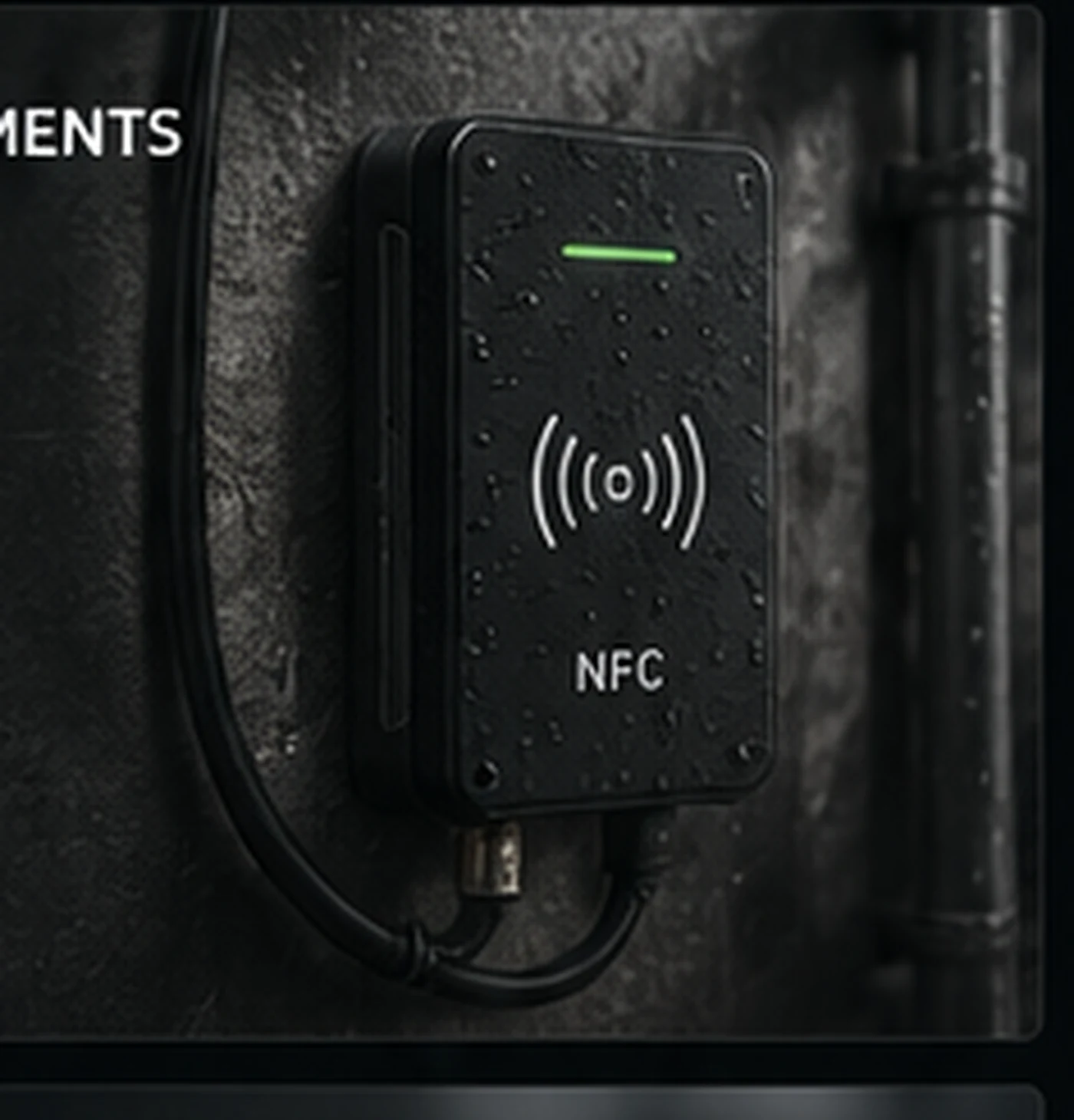
Illustrative rugged NFC RFID reader in an industrial environment Illustrative rugged reader installation
SECURITY & PRIVACY

Contactless does not automatically mean secure.

Security depends on the chosen tag, reader, protocol and system design. A simple tag ID should not be treated as strong authentication when the workflow requires higher assurance.

MINIMISE TAG DATA

Store only what is necessary on the physical credential. Often an identifier that maps to server-side data is preferable.

VALIDATE SERVER-SIDE

Permissions and business rules should live in controlled application logic, not only on the tag.

CHOOSE THE RIGHT CREDENTIAL

Higher-security use cases may require cryptographic tags, secure readers or additional authentication.

HANDLE LOST CREDENTIALS

Cards and tags should be revocable and replaceable where they represent people or permissions.

LOG IMPORTANT EVENTS

Meaningful interactions can be timestamped to support auditing and traceability.

PRIVACY BY DESIGN

Personal data, retention and access should be limited to what the actual workflow requires.

INTEGRATION READY

Identification becomes more useful when it connects to existing information.

Where supported access exists, an NFC/RFID system can exchange data with user directories, HR systems, ERP/WMS platforms, maintenance systems, databases, internal APIs or other business applications.

The exact integration depends on the customer's interfaces, permissions, licensing, documentation and security requirements.

REST / APIDatabasesHR / usersERP / WMSMaintenanceCustom interfaces
FROM ONE TAG TO A COMPLETE IDENTIFICATION FLOW

Start with the action that should become simpler.

Tell us who or what needs to be identified, where it happens and what should happen next. We can help define the tag, reader, local application, permissions, data flow and integrations around it.

Discuss an NFC / RFID solution